
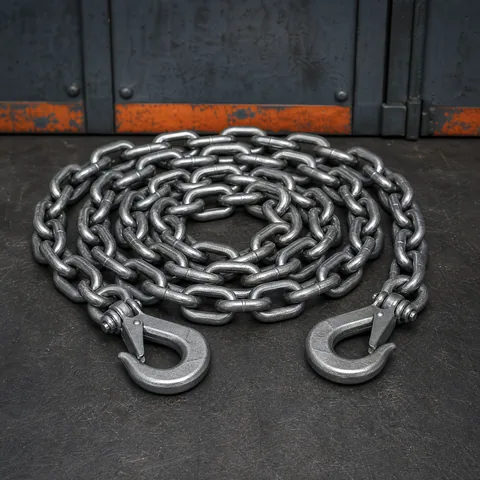
Lashing Chains
Transport chains for tractors, harvesters and forestry equipment, subject to grade and application confirmation.
View Lashing ChainsSecure tractors, harvesters, implements and forestry equipment with a tie-down system matched to machine geometry, attachments and route conditions.
Farm and forestry machines combine large dimensions, uneven weight distribution, moving attachments and changing transport conditions.
Cabs, booms, hoppers, wheels and counterweights can create complex movement paths on trailers and low-loaders.
Buckets, headers, arms, implements and removable tools need their own review so they do not move into the primary machine.
Equipment can arrive with mud, water, plant residue or exposure that affects inspection, cleaning and handling.
Chains, hooks and binders must be positioned to avoid unnecessary abrasion or concentrated contact on finished machine areas.
Dealer, rental and export movements may use different trailers, anchor points and loading sequences.
Harvest seasons and equipment fleets require identifiable, repeatable hardware sets that can be inspected and replenished.
Start from the machine and attachment configuration, then match the chain, binder, hook and accessory set to the vehicle and route.
| Application Scenario | Recommended Product System | What It Solves | Project Focus |
|---|---|---|---|
| Tractors and loaders | G70/G80 Lashing Chains + Load Binders | Direct restraint for high-mass machines with practical tensioning access. | Review frame points, wheel or track position, center of gravity and trailer anchors. |
| Harvesters and combines | Lashing Chain Assemblies + Compatible Hooks | Repeatable connection for large machines with hoppers, headers and uneven profiles. | Review removable headers, overhang, access, surface protection and route. |
| Forestry machines | Lashing Chains + Binders + Chain Accessories | Adaptable restraint for machines operating in rough environments and varied fleet configurations. | Review structural points, attachments, mud or moisture exposure and inspection access. |
| Implements and attachments | Lashing Chains + Hooks + Accessories | Separate restraint for plows, headers, booms, buckets and other loose equipment. | Confirm contact areas, lifting points, attachment stability and unloading order. |
| Dealer and rental fleets | Standardized Chain Assemblies + Replacement Parts | Consistent loading practice for recurring machine models and branches. | Build model-specific sets, inspection points and replenishment quantities. |
| Export machinery | Matched Chains, Binders, Hooks and Documentation | Coordinated hardware for road, port and final-delivery handling. | Confirm route, trailer, packaging, destination and handoff requirements. |
Select the primary restraint system for the machine, then confirm compatible hooks, binders, accessories and supplementary webbing.
Transport chains for tractors, harvesters and forestry equipment, subject to grade and application confirmation.
View Lashing Chains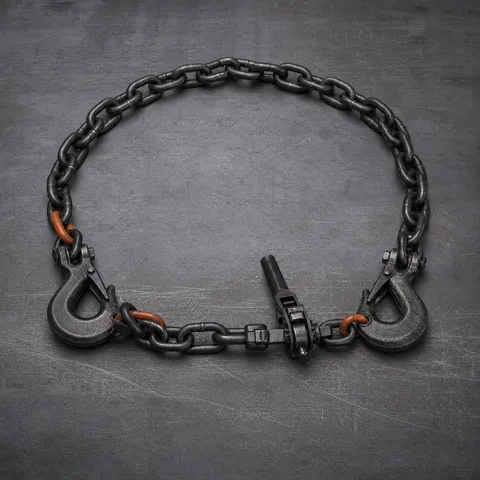
Finished assemblies for repeatable fleet and seasonal equipment movements.
View Lashing Chain Assemblies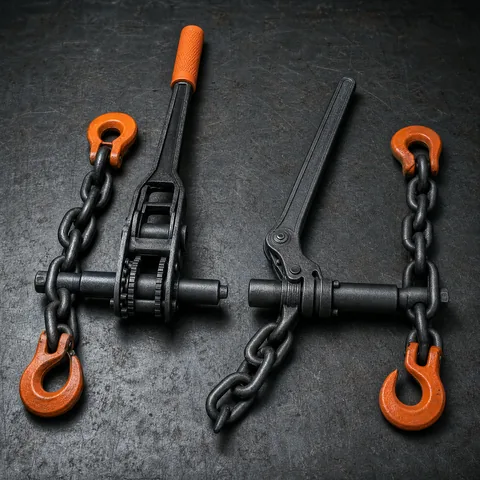
Ratchet and lever binders for controlled tensioning and release in compatible chain systems.
View Load Binders
Hook styles for machine, trailer and attachment connection arrangements.
View Lashing Hooks
Links, shackles and fittings for adapting the restraint path to equipment and trailer points.
View Chain Accessories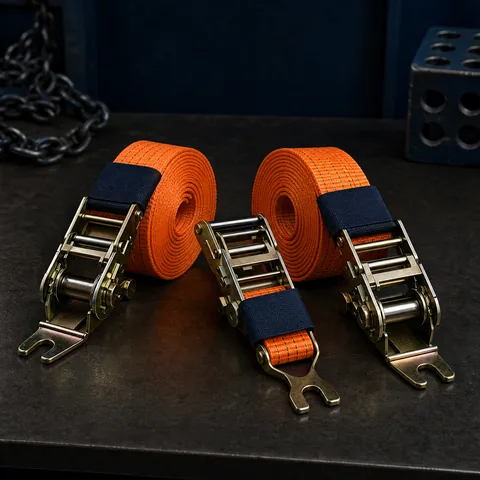
Webbing options for protected attachments, covers or supplementary restraint where appropriate.
View Ratchet Straps & Webbing
When the cargo, trailer, deck or handling process falls outside a standard setup, LashLok can coordinate a project-specific configuration.
Request Project SupportThese references identify review considerations rather than fixed load plans. Final selection depends on the machine, trailer, route and quantity.
A tractor and loader set required restraint around the frame while keeping attachments and inspection points accessible.
Review machine connection points, wheel position, center of gravity and trailer layout before pairing chains with binders.
A combine and header moved through seasonal routes with different loading and unloading stages.
Treat the header as a separate load element, confirm contact protection and document the release sequence.
A forestry machine faced rough access roads, mud exposure and limited access around the working equipment.
Review structural points, attachment position, chain clearance, inspection access and cleaning or maintenance conditions.
A dealer or rental network needed identifiable restraint sets for repeated movements between branches and sites.
Standardize hardware by machine family and keep compatible replacement components available.
Agricultural and forestry equipment changes shape when attachments, headers and tools are installed or removed.
Review the exact machine and attachment combination that will travel.
Plan a separate restraint path for headers, buckets, arms, tools and implements.
Keep chains, binders and hooks clear of hydraulic lines, controls and vulnerable surfaces.
Seasonal equipment movements often involve different operators, sites, trailers and time pressure.
Define the chain assembly, binder, hook and accessory combination for each machine family.
Document loading, tensioning, inspection and release so different teams can follow it.
Reconfirm the setup when equipment, trailer, route or destination changes.
Dirt, moisture and plant residue can obscure contact points and affect the practical inspection routine.
Clear connection points and inspection zones enough to identify hardware and movement marks.
Look for abrasion, chain pinch points, surface damage and changes after transport.
Use photos or notes to improve the next seasonal movement and replenishment plan.
A clear component list helps dealers, rental fleets and contractors maintain compatible hardware across seasons.

Create a hardware set for each machine or attachment family.
Keep chain length, hook style, binder type and accessory compatibility clear.
Reconfirm the restraint set when machines or attachments are changed.
We review the machine configuration, trailer and operating route together so the restraint plan remains repeatable in seasonal use.
We review dimensions, weight, center of gravity, machine frame, removable attachments, contact surfaces and loading method.
We confirm trailer or low-loader layout, anchor points, deck contact, route exposure, site access and handoff stages.
We match chain grade, finished length, hook style, binder type and accessories to the proposed restraint path.
We define loading, tensioning, inspection, cleaning or maintenance considerations and release sequence.
Where required, we coordinate drawings, product details, samples or project-specific specification confirmation.
We support inspection records, loading photos, packing information and export coordination according to scope.
Working load limit must be confirmed for the selected model, configuration, angle, anchor point and application.
Headers, buckets, implements and tools should be reviewed as separate load elements when they can move independently.
Dirt, moisture, corrosion exposure and cleaning conditions should be considered in the inspection and maintenance routine.
Model-specific hardware lists, inspection notes, loading photos and shipment documents can be organized for qualifying projects.
Specification sheets, dimensions and model-level product information may be provided according to the selected system.
Final machinery transport restraint must be confirmed by the responsible transport team for the actual equipment, trailer, route and operating conditions.
We can review the machine model, weight, dimensions, connection points, attachments, trailer and route before recommending a compatible chain, binder and hook combination.
Loose attachments should be reviewed as separate load elements with their own connection path, contact protection and release sequence.
Yes. We can help define model-specific hardware sets, compatible replacement parts and inspection information for recurring seasonal routes.
Field conditions can affect visibility, contact surfaces, corrosion exposure and inspection. Share the operating environment so the product and maintenance requirements can be reviewed.
We can coordinate lashing chains, finished assemblies, binders, hooks and accessories as a project set, subject to the required specification and quantity.
Please send machine and attachment details, dimensions, weight, photos, trailer or anchor-point information, route, quantity and any current tie-down reference.