
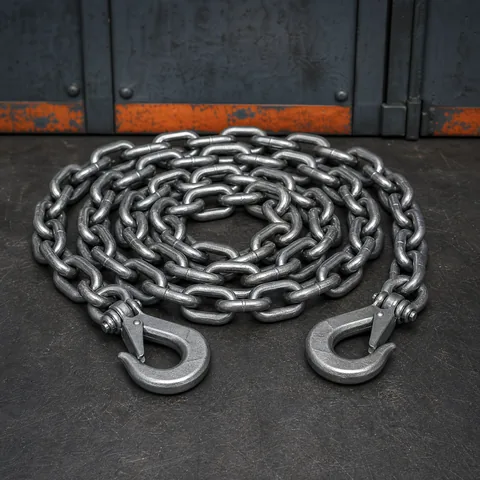
Lashing Chains
Transport chains for vehicles, equipment and project cargo, subject to grade, model and route confirmation.
View Lashing ChainsCoordinate cargo restraint for vehicles, mobile equipment, offshore modules and marine project loads across road, port and vessel handling stages.

Multi-stage marine logistics introduces changing decks, anchor points, weather exposure and handling teams. The restraint brief must make those transitions visible.
Vehicle deck motion, road transport and handling can create movement in more than one direction.
The available lashing points, deck layout and access can vary between vessels, trailers, yards and project sites.
Marine environments can expose cargo and hardware to salt air, rain, spray, dirt and long dwell periods.
Offshore equipment, vehicles and modules may have high or offset centers of gravity that affect the restraint path.
Skids, frames, generators and fabricated structures often need project-specific connection and contact review.
Road carriers, terminals, vessel teams and receivers need a shared view of the planned hardware and inspection points.
Review the cargo, deck or trailer, route and handoff sequence together. Product selection must be confirmed against the responsible transport plan.
| Application Scenario | Recommended Product System | What It Solves | Project Focus |
|---|---|---|---|
| Wheeled vehicles and mobile plant | Lashing Chains + Load Binders + Compatible Hooks | Direct restraint for vehicles and equipment through suitable structural points. | Confirm deck or trailer anchor points, wheel or track position, clearance and inspection access. |
| Tracked equipment | G70/G80 Lashing Chains + Chain Accessories | Adaptable restraint for high-mass machinery moving through road and marine stages. | Review track contact, machine frame, center of gravity and changing deck conditions. |
| Offshore modules and skids | Lashing Chains + Binders + Project Accessories | Project-specific restraint around frames, skids and non-standard connection points. | Review lifting vs restraint points, sea or road route, support structure and contact zones. |
| Generators and packaged equipment | Chain Assemblies + Ratchet Straps & Webbing | Repeatable restraint for protected units and supplementary control of packaged components. | Separate primary chain restraint from protected secondary restraint. |
| Fabricated project frames | Lashing Chains + Hooks + Accessories | Controls irregular structures through a reviewed connection path. | Confirm frame strength, edges, welds, center of gravity and anchor access. |
| Multi-stage export cargo | Matched Chains, Binders, Hooks and Documentation | Improves handoff clarity across truck, terminal, vessel and receiving teams. | Define inspection records, loading photos, hardware identity and release sequence. |
Coordinate the primary chain restraint with compatible binders, hooks, accessories and supplementary webbing for the actual handoff sequence.
Transport chains for vehicles, equipment and project cargo, subject to grade, model and route confirmation.
View Lashing Chains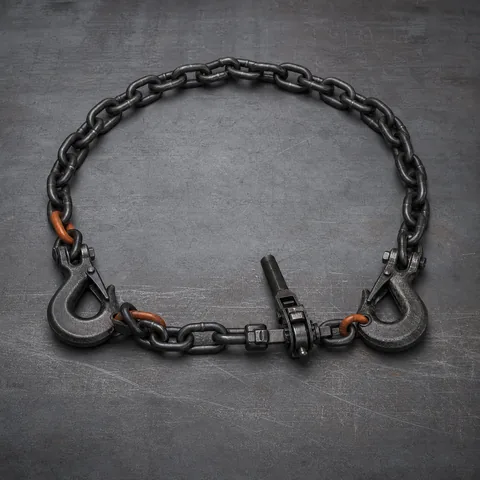
Finished assemblies for identifiable and repeatable multi-stage loading.
View Lashing Chain Assemblies
Ratchet and lever binders for controlled chain tensioning and practical release.
View Load Binders
Hook options for trailer, deck, vehicle and project anchor-point arrangements.
View Lashing Hooks
Links, shackles and fittings for adapting compatible restraint systems around project cargo.
View Chain Accessories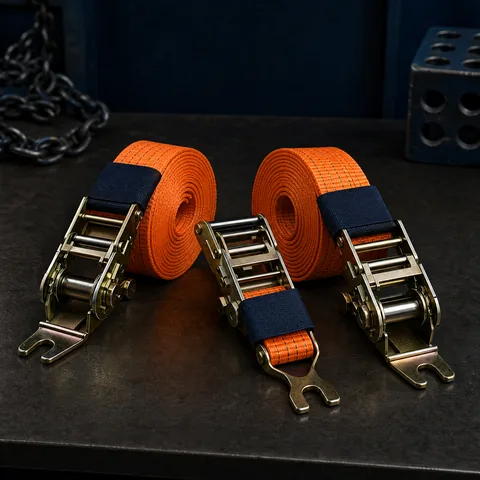
Webbing systems for protected packaged units or supplementary restraint where appropriate.
View Ratchet Straps & Webbing
When the cargo, trailer, deck or handling process falls outside a standard setup, LashLok can coordinate a project-specific configuration.
Request Project SupportThese are planning references, not vessel-specific load instructions. Final restraint must be confirmed against the deck, route, cargo and responsible carrier or vessel requirements.
A mobile machine required restraint through suitable structural points while keeping deck access and inspection visible.
Review machine geometry, deck anchors, wheel or track position, chain angles and the release sequence with the responsible transport team.
A tracked machine moved through road, terminal and vessel stages with different handling teams.
Create an identifiable chain set, document anchor locations and coordinate inspection points for each handoff.
A heavy module had a frame base, lifting points and non-standard restraint locations across a multi-stage move.
Separate lifting and restraint review, then configure chains, binders and accessories around verified structural points.
An irregular frame and protected components traveled together with different primary and supplementary restraint needs.
Use the chain system for the main load path and review webbing for protected secondary units where appropriate.
Ro-Ro and marine cargo can pass through road, terminal, vessel and receiving operations before the journey is complete.

List the trailer, yard, deck, vessel and receiving conditions that affect the restraint plan.
Use a clear component list so different teams can recognize the intended setup.
Document how connections are inspected and removed at each planned handoff.
A restraint system is only useful when the deck or vehicle provides accessible, suitable connection points.
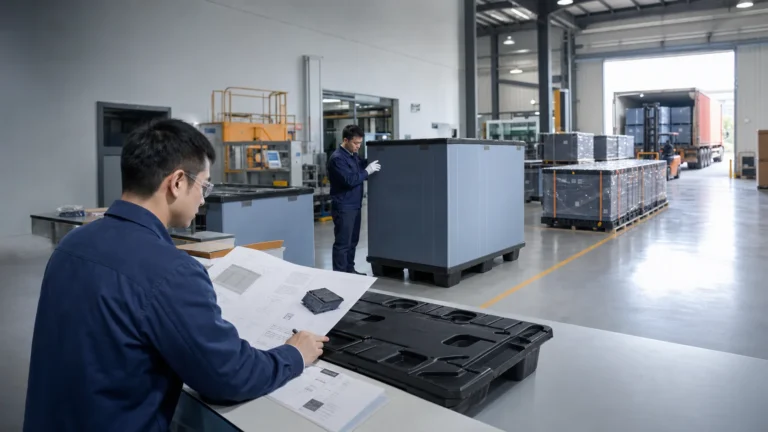
Review anchor type, spacing, accessibility, clearance and any deck restrictions.
Check center of gravity, support points, wheel or track position and movement paths.
Use the responsible carrier or vessel team to confirm the final operating requirements.
Salt, moisture and weather can affect cargo surfaces, hardware condition and the inspection routine.
Identify dwell time, weather exposure, salt air, spray and storage conditions.
Check chain, hook, binder, accessory and cargo contact areas after handling stages.
Use photos and inspection notes when the cargo changes hands or route conditions.
Project cargo moves more smoothly when the intended restraint and inspection record follows the load.

Record chain grade, length, hook, binder and accessory selection.
Keep dimensions, photos, support details and inspection checkpoints together.
Reconfirm the plan when deck, carrier, route, cargo or handoff conditions change.
We coordinate cargo geometry, deck or trailer constraints and handoff documentation into a reviewable project brief.
We review cargo dimensions, weight, center of gravity, surface condition, lifting method, road route, port handling and vessel or deck stage.
We confirm vehicle or deck layout, anchor points, clearance, support conditions and access for tensioning and inspection.
We match chain grade, finished length, hook style, binder type and accessories to the proposed restraint path.
We define inspection points, loading photos, connection sequence, staged release and remaining-load stability.
Where required, we coordinate drawings, product details, samples or project-specific specification confirmation.
We support inspection records, loading photos, packing information and export coordination according to scope.
Working load limit must be confirmed for the selected model, configuration, angle, anchor point and application.
Vehicle or vessel deck requirements, anchor geometry and access must be confirmed with the responsible transport team.
Salt, moisture, weather and dwell conditions should be considered in product selection, inspection and maintenance.
Loading photos, inspection notes, hardware lists and shipment documents can be organized for qualifying projects.
Lifting points, support structure and tie-down points should be reviewed separately for project cargo.
Final Ro-Ro or marine cargo restraint must be confirmed by the responsible carrier, vessel or transport team for the actual route and operating conditions.
We can review the vehicle or machine, deck or trailer anchor points, route, handling stages and required restraint method before coordinating compatible chains, binders and hooks.
We can help organize the cargo, deck, anchor, hardware and documentation review. Final operating requirements must be confirmed by the responsible carrier, vessel or qualified transport team.
Share drawings or photos, dimensions, weight, center of gravity, lifting points, skid or frame details, anchor constraints and the planned road, port and vessel stages.
Possibly, but the complete route and changing anchor conditions must be reviewed. A setup suitable for one stage may need confirmation or additional components for another.
Exposure, dwell time, surface condition, inspection routine and product material or finish should be reviewed before finalizing the hardware set.
Please provide cargo type, dimensions, weight, photos or drawings, center of gravity where available, deck or trailer details, route, handoffs, quantity and current hardware reference.